

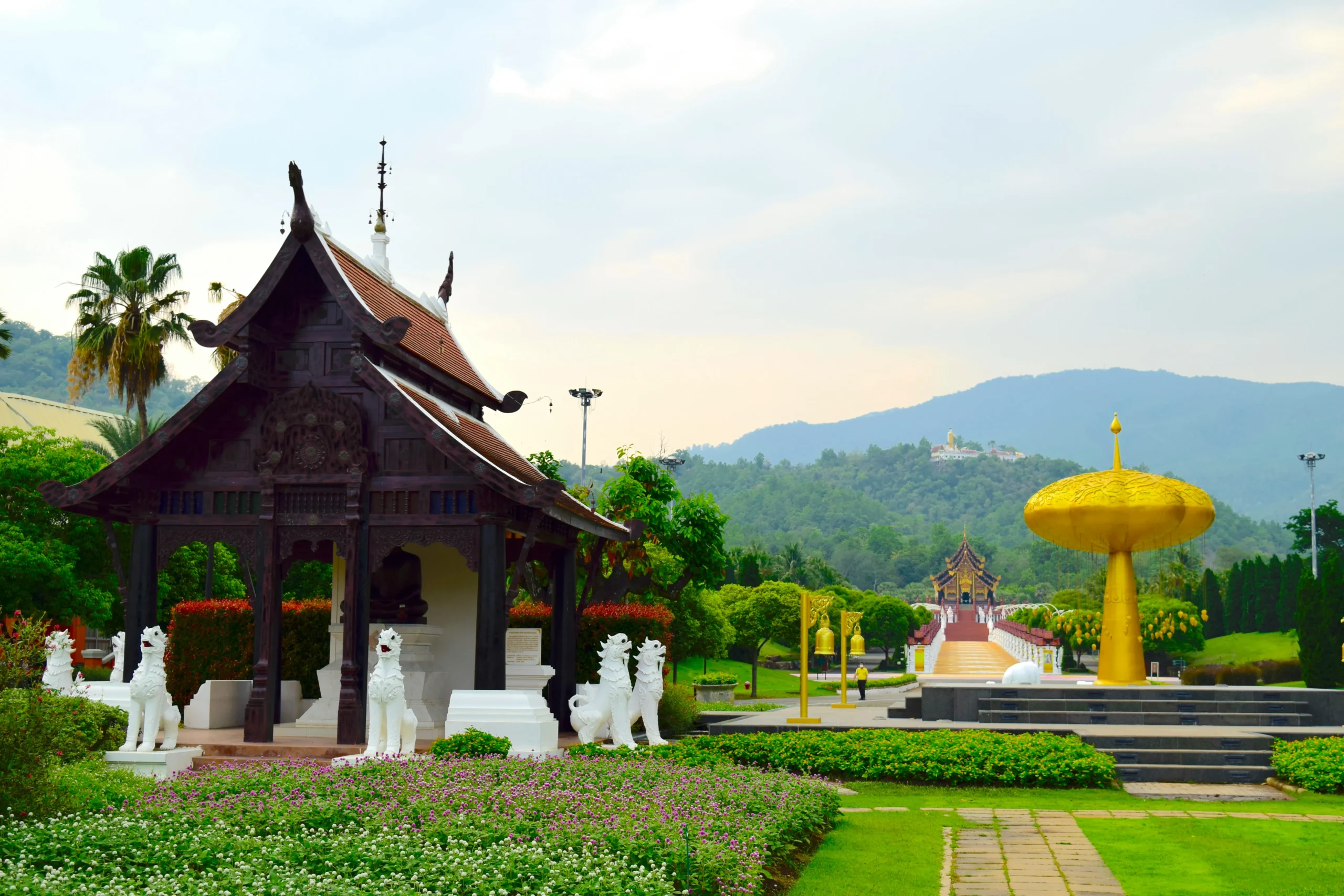
It’s the kind of place that makes a Chiang Mai travel guide feel deeply personal — shaped by quiet mornings, warm people, and slow, meaningful days.
Why This Chiang Mai Travel Guide Stays With You
Chiang Mai is one of those places that gently works its way into your heart. It doesn’t overwhelm you with noise or speed — instead, it invites you to slow down, breathe a little deeper, and let the days unfold naturally. Every time I return, I’m reminded of how different it feels from the rest of Thailand. There’s a softness to the air here, a calmness in the way people move, and a sense of history that lingers in every narrow lane of the Old City.
Mornings in Chiang Mai are my favourite. The light is gentle, the streets are quiet, and you’ll often see monks walking barefoot, collecting alms in their saffron robes. There’s something grounding about watching the city wake up the smell of incense drifting from temple courtyards, the sound of bells ringing softly, the way the mountains sit quietly in the distance like they’re watching over everything.
What I love most is how Chiang Mai blends culture and nature so effortlessly. One moment you’re wandering through centuries‑old temples, and the next you’re driving up winding mountain roads toward Doi Suthep, where the city stretches out below you like a soft, hazy painting. Evenings are warm and atmospheric lanterns glowing above night markets, the scent of grilled meats and spices filling the air, and the gentle hum of people moving slowly through the streets.
Chiang Mai is also incredibly welcoming for Australians. It’s affordable, safe, and full of experiences that feel authentic and meaningful. Whether you’re exploring the Old City, learning to cook Thai food, visiting ethical elephant sanctuaries, or simply enjoying the mountain air, Chiang Mai has a way of making you feel both peaceful and inspired.
This Chiang Mai travel guide is really about those quiet, grounding moments that stay with you long after you’ve left.
How to Get There — Flights to Chiang Mai
If you’re planning your trip using this Chiang Mai travel guide, here’s how I recommend thinking about flights and connections.
Reaching Chiang Mai from Sydney is easier than most people expect. There are no direct flights, but the connections are smooth and comfortable. Most travellers fly via Bangkok, Singapore, or Kuala Lumpur, and the journey usually takes around 12 to 14 hours, depending on your layover.
I’ve always found Thai Airways to be one of the most seamless options warm service, comfortable cabins, and a quick connection in Bangkok that gets you to Chiang Mai in just over an hour. Singapore Airlines is another favourite of mine, especially if you enjoy a calm, premium transit experience. Their connection through Changi Airport is effortless, and the onward flight to Chiang Mai is short and scenic.
If you’re looking for value, Scoot and AirAsia offer excellent fares with surprisingly comfortable flights. They’re perfect if you prefer to save on the journey and spend more on experiences once you arrive.
I personally love arriving in Chiang Mai in the late afternoon. The light softens, the mountains turn a deep shade of blue, and the drive into the city feels like the perfect introduction to Northern Thailand’s slower rhythm.
If you’re planning your trip, you can explore flight options using the link below it’s an easy way to find the best routes and prices for your dates.
Visa & Entry Requirements for Australians
Thailand makes things wonderfully simple for Australian travellers. You can enter visa‑free for up to 30 days, which is perfect for a holiday in Chiang Mai. Your passport just needs to be valid for at least six months from your arrival date.
The arrival process is smooth and friendly. You’ll fill out a short arrival card, hand it to immigration, and that’s it. Thailand’s officers are warm and efficient, and the whole process usually takes only a few minutes.
Customs is straightforward too just declare any large amounts of cash, drones, or professional camera equipment if you’re carrying them. Otherwise, you’ll walk straight through.
You can confirm the latest entry rules on the Thai Embassy Australia website.
Getting Around Chiang Mai — Local Transportation
One thing every Chiang Mai travel guide mentions is how relaxed and easy the city feels once you understand its rhythm.
The Old City is wonderfully walkable narrow lanes, small cafés, temples tucked between houses, and a gentle flow of people going about their day. When you need to travel a little further, the red songthaews (shared trucks) are everywhere. They’re simple, cheap, and surprisingly fun you just hop in the back, tell the driver your destination, and enjoy the ride.
Tuk‑tuks are another option, especially for short distances. They’re lively, colourful, and part of the Chiang Mai experience. For comfort and convenience, Grab (Thailand’s ride‑hailing app) is reliable and affordable perfect for evenings or longer trips.
If you’re confident on a scooter, Chiang Mai is one of the easier cities to ride in, especially outside the Old City. But if you’re not, it’s better to stick to Grab or songthaews the roads can get busy, and the mountain routes require experience.
For day trips into the mountains waterfalls, temples, elephant sanctuaries hiring a private driver is the most comfortable option. They know the roads, the hidden spots, and the best times to visit.
Staying Connected — SIM Cards & Wi‑Fi
Thailand has excellent mobile coverage; staying connected is simple, and every Chiang Mai travel guide recommends AIS or DTAC for the best coverage, all reliable, fast, and incredibly affordable. You can buy them at the airport or at any convenience store in the city.
If you prefer to land connected instantly, eSIMs like Airalo work beautifully. And if you’re travelling with others, a pocket Wi‑Fi device is a great option.
Money Matters
Chiang Mai uses the Thai Baht (THB), and while cards are accepted in many places, cash is still useful — especially for markets, street food, tuk‑tuks, and small cafés. A tip I always include in my Chiang Mai travel guide is to carry a mix of cash and card — it makes markets and street food stalls easier.
ATMs are everywhere, and withdrawing money is simple. I always travel with a WISE card the exchange rates are excellent, and it works seamlessly across Thailand. It’s also perfect for withdrawing small amounts of cash without worrying about hidden fees.
If you prefer to exchange money, do it at reputable exchange counters in the city rather than at the airport the rates are much better.
Stay Safe & Aware — What Not to Do
Chiang Mai is warm, welcoming, and generally very safe, but a few simple habits make your trip smoother.
Temples are sacred spaces, so dress respectfully shoulders and knees covered and remove your shoes before entering. Avoid touching monks, especially if you’re a woman, as it’s considered inappropriate.
Street food is delicious, but choose stalls that are busy and cook everything fresh. And always drink bottled or filtered waterit’s the easiest way to avoid any stomach issues.
Scams are rare in Chiang Mai, but it’s still good to agree on tuk‑tuk prices before you start your ride. And if you’re heading into the mountains, check the weather sudden rain can make the roads slippery.
A Few Local Words to Make Your Day
Thai people appreciate even the smallest effort to speak their language. These simple words always bring a smile:
Sawadee kha/krub — Hello
Khop khun kha/krub — Thank you
Tao rai? — How much?
Mai spicy — Not spicy Chai / Mai chai — Yes / No
They’re easy to remember and make interactions warmer.
Things to Do in Chiang Mai
Chiang Mai is full of experiences that feel gentle, meaningful, and beautifully human.
One of my favourite moments is watching the sunrise from Doi Suthep. The temple sits high above the city, and in the early morning light, everything feels still and sacred. The golden chedi glows softly, monks chant in the background, and the city stretches out below you in a quiet haze.
The Old City is a world of its own — ancient walls, narrow lanes, and temples that feel timeless. Wandering through Wat Phra Singh or Wat Chedi Luang in the late afternoon, when the light turns warm and the air cools, is one of the most peaceful experiences you can have.
Chiang Mai is also known for its ethical elephant sanctuaries. Spending a day learning about these gentle giants — feeding them, walking beside them, watching them play in the river — is something that stays with you long after you leave.
Evenings are warm and atmospheric. The Night Bazaar and Sunday Walking Street are full of life — lanterns glowing, artisans selling handmade crafts, the scent of grilled meats and spices drifting through the air. It’s the kind of place where you wander slowly, tasting, browsing, and soaking in the atmosphere.
And if you’re here during the Yi Peng Lantern Festival, you’ll witness something truly magical — thousands of lanterns rising into the night sky, glowing softly as they drift upward. It’s one of the most beautiful sights I’ve ever seen.
Local Food & Dining
Northern Thai cuisine is rich, comforting, and full of flavour. Chiang Mai is the home of khao soi — a creamy, spicy coconut curry noodle soup topped with crispy noodles. It’s warm, fragrant, and something I always crave long after I leave.
You’ll also find sai ua (herbal sausage), sticky rice, grilled meats, and nam prik ong (a tomato‑based chili dip). The flavours are bold but balanced, and the food feels both comforting and exciting.
If you’re sensitive to spice, just say “mai spicy” — locals understand and adjust the heat.
Some of my favourite places include:
Khao Soi Mae Sai — simple, authentic, unforgettable.
Dash! Restaurant & Bar — beautiful atmosphere, great Northern Thai dishes.
Ginger & Kafe — stylish, modern, perfect for a slow dinner. The Riverside — lovely views and live music.
And if you ever need something familiar, Chiang Mai has McDonald’s, KFC, Burger King, and Starbucks — easy to find and reliable.
My Personal Tips
Wake up early at least once — the mornings are magical.
Visit temples slowly — they’re places to breathe, not rush.
Try a Thai cooking class — it’s one of the best ways to understand the culture.
Spend a day in the mountains — the air is cooler, the views are beautiful.
And let the city set the pace — Chiang Mai rewards slow travel.
Best Time to Visit Chiang Mai
If you’re using this Chiang Mai travel guide to choose your season, think about whether you prefer cool mornings, lush mountains, or festival nights.
The best time to visit is from November to February, when the weather is cool, clear, and perfect for exploring. March to May is hot but lively. June to October brings rain, but the mountains turn lush and green — beautiful in their own way.
If you want to experience the lantern festival, plan for November — it’s unforgettable.
Best Places to Stay in Chiang Mai
Choosing the right neighbourhood is one of the most important parts of any Chiang Mai travel guide.
The Old City is perfect for culture and convenience.
Nimmanhaemin is stylish, modern, and full of cafés.
The Riverside is peaceful and scenic.
And the mountain retreats around Mae Rim are perfect for slow, restorative stays.
What to Pack
Chiang Mai is warm during the day and cooler in the evenings, especially in the mountains. I always pack light, breathable clothing, a shawl or light jacket for evenings, and something respectful for temple visits — shoulders and knees covered.
A small torch is useful for night markets, and insect repellent is essential. Bring basic medicines, a power bank, a reusable water bottle, and a rain jacket if you’re visiting during the wet season.
Comfortable shoes are a must — you’ll walk more than you expect.
Q: Do Australians need a visa for Chiang Mai?
A: No. Australians can enter Thailand visa‑free for up to 30 days. Your passport must be valid for at least six months.
Q: How long should I spend in Chiang Mai?
A: 4–7 days is ideal for temples, mountains, markets, and a cooking class without rushing.
Q: Is Chiang Mai safe for solo travellers?
A: Yes. Chiang Mai is one of Thailand’s safest and most welcoming cities, especially for slow travellers.
Q: When is the best time to visit Chiang Mai?
A: November–February for cool weather; June–October for lush mountains; November for the lantern festival.
Q: What’s the best way to get around Chiang Mai?
A: Songthaews, Grab, and private drivers are the easiest and most comfortable options.